Helical Piers in Kansas City, Missouri
Engineered Deep Foundation Systems & Certified Installer AccessSince 1991, we have provided homeowners, structural engineers, and commercial contractors throughout Kansas City with technical information and access to certified helical pier installers.
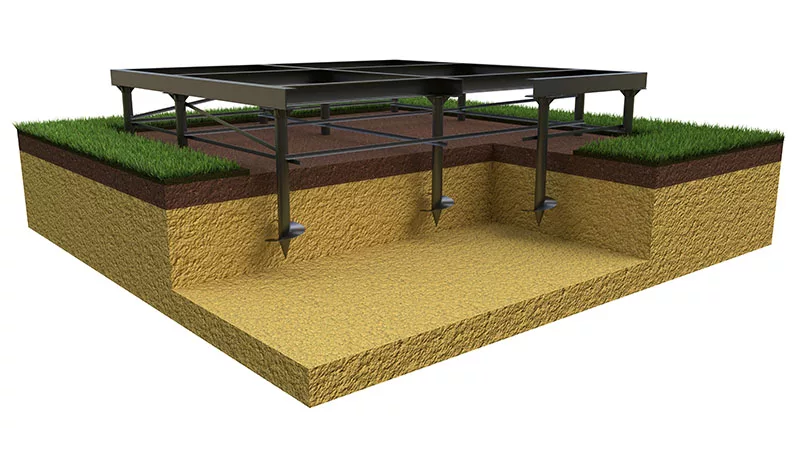
The Kansas City region presents diverse subsurface conditions, including clay soils, loess deposits, limestone bedrock formations, and freeze–thaw exposure. These factors contribute to differential settlement in both residential and commercial structures. Helical pier systems are engineered to transfer structural loads beyond unstable upper soil layers into stable bearing strata, providing long-term foundation stabilization across the Kansas City metro area.
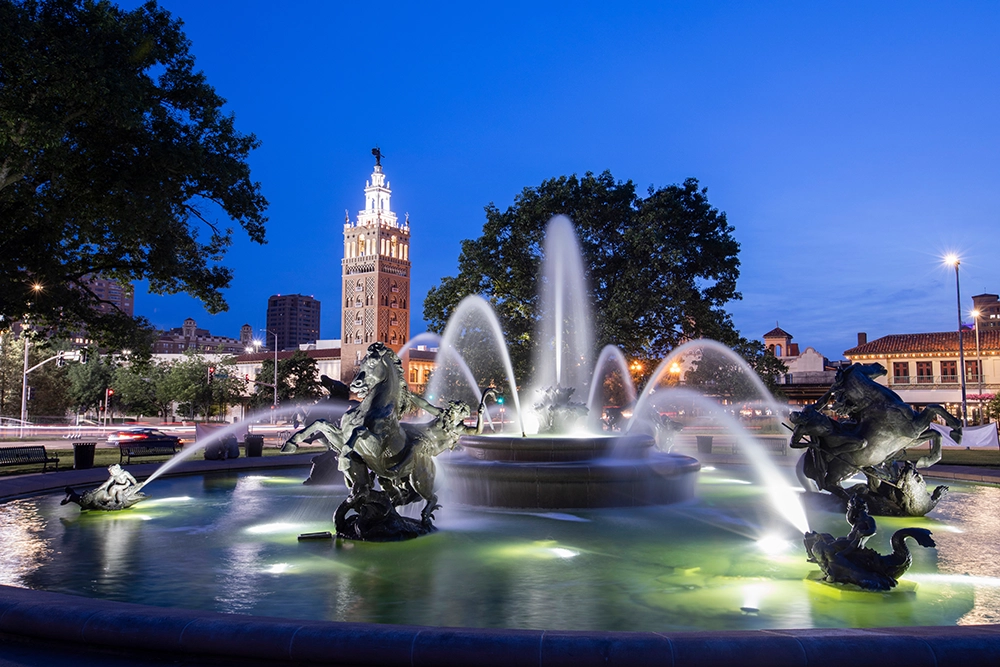
We support projects throughout Kansas City and surrounding communities by connecting property owners and design professionals with certified installers and specification-grade helical foundation systems.
Contact Us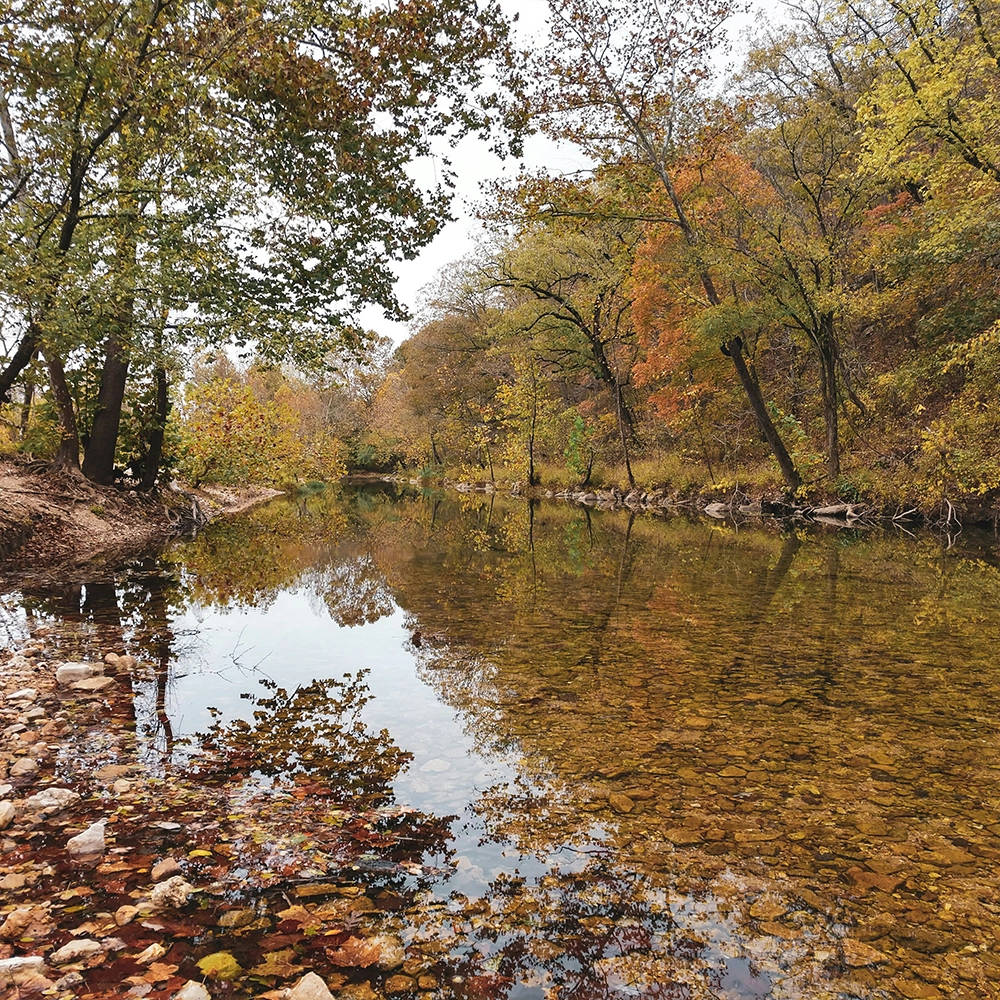
Soil & Geotechnical Conditions in Kansas City
Kansas City’s soil profile varies across the metropolitan area. Many neighborhoods are built on clay-rich soils that experience seasonal moisture expansion and contraction. In other areas, wind-deposited loess soils can create settlement concerns due to their collapsible nature when exposed to moisture.
Additionally, portions of the region contain limestone bedrock at varying depths. While bedrock may provide stable bearing once reached, inconsistent depth profiles can complicate shallow foundation performance.
Seasonal freeze–thaw cycles further influence soil movement, particularly in near-surface layers.
Common structural impacts in Kansas City include:
- Slab-on-grade settlement
- Foundation wall cracking
- Brick veneer separation
- Basement wall movement
- Differential settlement on sloped lots
- Retaining wall displacement
Helical piers are designed to penetrate unstable surface soils and anchor into consistent load-bearing strata, reducing exposure to seasonal moisture and temperature fluctuations.
Helical Pier Applications in Kansas City
Helical deep foundation systems are specified throughout Kansas City for both structural repair and new construction support.Residential Applications
- Slab foundation underpinning
- Basement wall stabilization
- Pier-and-beam correction
- Addition support systems
- Deck and porch deep foundations
Commercial & Structural Applications
- Structural column support
- Light industrial foundation systems
- Retaining wall tie-back systems
- Infrastructure and utility support
- New construction deep foundation design
Helical piers provide immediate load-bearing capacity and are suitable for retrofit applications where excavation must be minimized.
Why Engineers Specify Helical Piers in the Kansas City Region
Structural engineers working in the Kansas City metro frequently specify helical pier systems because they offer:
- Torque-monitored installation with measurable capacity
- Adaptability to variable soil and bedrock depths
- Minimal vibration compared to driven pile systems
- Reduced excavation footprint
- Immediate structural loading capability
- Reliable performance across freeze–thaw cycles
Installation torque is monitored during placement and correlates to axial capacity based on engineered load requirements.
Serving the Greater Kansas City Metro
Certified helical pier installers are available throughout:- Kansas City, MO
- Overland Park, KS
- Olathe, KS
- Independence, MO
- Lee’s Summit, MO
- Blue Springs, MO
- Shawnee, KS
- Lenexa, KS
- Liberty, MO
- Raytown, MO
Helical Piers vs. Concrete Piers in Kansas City Soil Conditions
In regions with variable clay, loess, and limestone depth profiles, shallow concrete piers may remain within soil layers influenced by moisture and temperature changes.Concrete pier considerations include:
- Continued exposure to seasonal soil movement
- Larger excavation requirements
- Cure time before load transfer
- Inconsistent bearing in mixed strata
Helical pier systems provide:
- Deep anchoring into consistent bearing layers
- Immediate load-bearing capacity
- Smaller installation footprint
- Torque-based verification during installation
For many Kansas City soil conditions, helical systems provide improved predictability and structural performance.
Frequently Asked Questions – Kansas City Helical Piers
Are helical piers appropriate for Kansas City clay soils?
Yes. Helical pier systems are designed to bypass moisture-sensitive clay layers and transfer loads into stable subsurface strata.
Can helical piers reach limestone bedrock?
Yes. Helical systems can be advanced until suitable bearing strata are achieved, including dense soil layers above or near bedrock.
Are helical piers suitable for basement wall stabilization?
Yes. Helical piers are frequently used in basement foundation repair applications throughout the region.
How is capacity verified during installation?
Installation torque is monitored and recorded, correlating to engineered axial load capacity.
Do Kansas City projects require engineering documentation?
Engineering and permitting requirements vary by municipality and project scope.
Technical Information & Installer Access – Kansas City, MO
For technical specifications, project consultation, or access to certified helical pier installers serving the Kansas City region, contact our team for assistance.
Helical pier systems provide engineered deep foundation support designed for the diverse soil and climate conditions present throughout the Kansas City metro area.