Helical Piers in Little Rock, Arkansas
Engineered Deep Foundation Systems & Certified Installer AccessSince 1991, we have provided homeowners, structural engineers, and commercial contractors throughout Little Rock with technical information and access to certified helical pier installers.
Central Arkansas presents varied subsurface conditions influenced by the Arkansas River Valley, including expansive clay soils, mixed sedimentary deposits, and shale formations at varying depths. Seasonal moisture changes and heavy rainfall events contribute to differential settlement across residential and commercial structures in the Little Rock region.
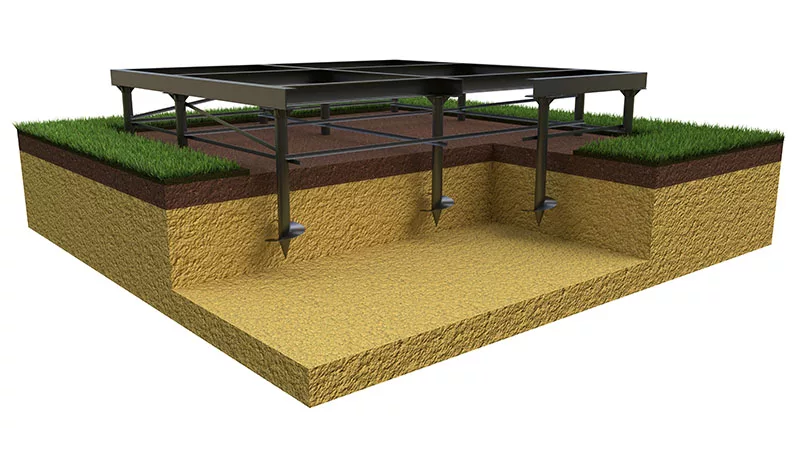
Helical pier systems are engineered to transfer structural loads beyond unstable upper soil layers into stable bearing strata, providing long-term foundation stabilization suited to Arkansas soil conditions.
We support projects throughout Little Rock and surrounding communities by connecting property owners and design professionals with certified installers and specification-grade helical foundation systems.
Contact Us

Soil & Geotechnical Conditions in Little Rock
The Little Rock area includes:
- Expansive clay soils sensitive to moisture fluctuation
- River-influenced alluvial deposits
- Shale and sedimentary formations
- Sloped terrain in portions of the metro area
These soil conditions can result in:
- Slab-on-grade settlement
- Basement wall cracking
- Brick veneer separation
- Foundation movement on sloped lots
- Retaining wall displacement
- Structural separation at additions
Expansive clay expands during wet periods and contracts during dry seasons, leading to repeated vertical movement in shallow foundation systems. Helical piers are designed to penetrate beyond active soil zones and anchor into stable load-bearing strata.
Helical Pier Applications in Little Rock
Helical deep foundation systems are specified throughout the Little Rock region for both structural repair and new construction support.Residential Applications
- Slab foundation underpinning
- Basement and crawlspace stabilization
- Structural correction of uneven settlement
- Porch and deck deep foundations
- Addition support systems
Commercial & Structural Applications
- Structural column support
- Light commercial foundation systems
- Retaining wall tie-back stabilization
- Infrastructure and utility support
- New construction deep foundation design
Helical piers provide immediate load-bearing capacity and are suitable for retrofit applications where excavation and vibration must be minimized.
Why Engineers Specify Helical Piers in Central Arkansas
Structural engineers working in the Little Rock area frequently specify helical systems because they offer:
- Torque-monitored installation with measurable capacity
- Adaptability to clay and shale transitions
- Reduced vibration compared to driven pile systems
- Minimal excavation footprint
- Immediate structural loading capability
- Reliable performance in moisture-sensitive soils
Installation torque is monitored during placement and correlates to axial capacity based on engineered load requirements.
Serving the Greater Little Rock Area
Certified helical pier installers are available throughout:- Little Rock
- North Little Rock
- Benton
- Bryant
- Sherwood
- Jacksonville
- Maumelle
- Conway
- Cabot
Helical Piers vs. Concrete Piers in Arkansas Soil Conditions
In clay-rich regions such as Little Rock, shallow concrete piers often remain within active soil layers influenced by seasonal moisture change.Concrete pier considerations may include:
- Continued exposure to shrink-swell cycles
- Larger excavation requirements
- Cure time before structural loading
- Variable performance in mixed shale soils
Helical pier systems provide:
- Deep anchoring into consistent bearing layers
- Immediate load-bearing capacity
- Smaller installation footprint
- Torque-based verification during installation
For many Little Rock soil conditions, helical systems provide improved predictability and long-term structural performance.
Frequently Asked Questions – Little Rock Helical Piers
Are helical piers appropriate for Arkansas clay soils?
Yes. Helical pier systems are designed to bypass moisture-sensitive clay layers and transfer structural loads into stable subsurface strata.
Can helical piers be used in areas with shale?
Yes. Helical systems can be advanced into suitable bearing layers beneath mixed soil and shale profiles.
Are helical piers suitable for sloped lots?
Yes. Helical systems are frequently used to stabilize structures built on sloped terrain.
How is load capacity verified?
Installation torque is monitored and recorded, correlating to engineered axial load capacity.
Are engineering approvals required?
Engineering and permitting requirements vary by municipality and project scope.
Technical Information & Installer Access – Little Rock, AR
For technical specifications, project consultation, or access to certified helical pier installers serving Little Rock and surrounding communities, contact our team for assistance.
Helical pier systems provide engineered deep foundation support designed for the varied soil and terrain conditions present throughout central Arkansas.